
8×10 Storage Shed: The Complete Buyer’s Guide for 2026
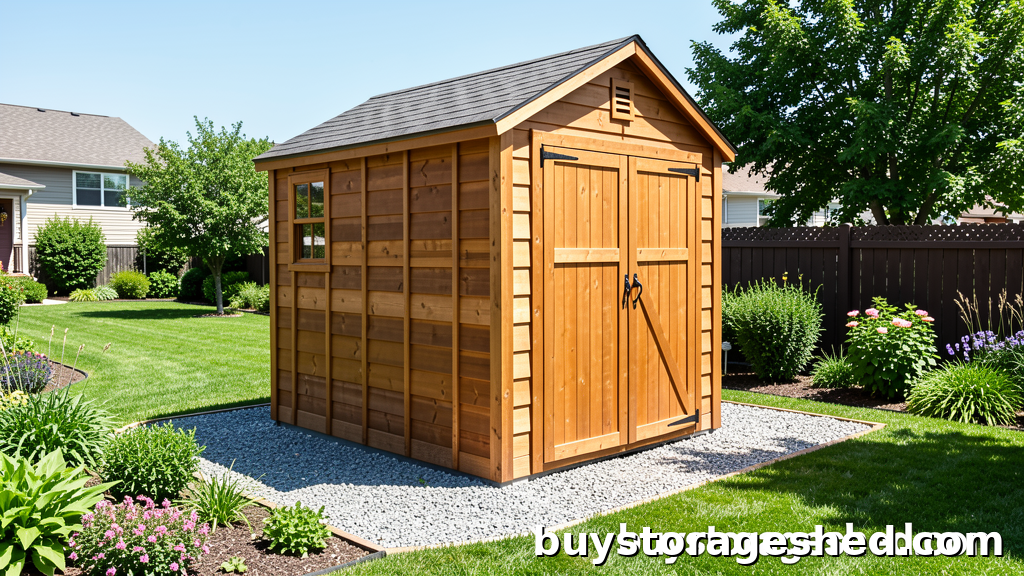
If you’re hunting for a storage shed that splits the difference between too small and too big, the 8×10 storage shed is where it’s at. Eighty square feet — enough for a riding mower, garden tools, bikes, and patio furniture — without swallowing your whole backyard. Most people land here after finding out a 6×8 is cramped and a 10×12 is more room than they actually need.
I’ve put this guide together to cover what matters: materials, foundations, costs, and the gotchas nobody tells you about.
Why an 8×10 Storage Shed Makes Sense
The 8×10 footprint fits just about anywhere. Along a fence line, in a side yard, tucked next to the garage — it works. And since it’s a standard size, you’ve got lots of choices in metal, wood, and resin across our storage shed collection.
So what fits in 80 square feet? More than you’d expect:
- A riding mower or zero-turn, with room to walk around it
- Bikes, a workbench, and shelving on the walls
- Patio furniture, the grill, and all those seasonal decorations
- Pots, bags of soil, and hand tools
The trick is using the walls. An 8×10 with 6- or 7-foot walls lets you hang pegboards and shelves without it feeling like a closet.
Metal, Wood, or Resin: Which One’s Right for You?
This is the big question. Here’s how they stack up.
Metal Sheds
Metal is the budget pick. Galvanized steel panels with a baked-on paint job.
Good parts:
- Cheapest option — around $800 to $1,500 for an 8×10
- Won’t burn or rot
- Goes together in a weekend
- No painting or staining
Bad parts:
- Dents from hail or a bumped lawn mower
- Can get condensation inside without good vents
- Doesn’t look as nice as wood
- Not much room for customization
A metal shed makes sense if you’re watching your budget and care more about function than how it looks from the house. Browse our metal shed selection for the most affordable options.
Wood Sheds
Wood is the classic. It looks the best and you can do just about anything with it.
Good parts:
- Blends into the yard — you can match your house color
- Paint or stain it whatever you want
- Easy to add shelves and hooks anywhere
- Stays cooler in summer than metal
Bad parts:
- Most expensive — $2,000 to $4,500 for an 8×10
- Needs paint or stain every couple of years
- Can rot or get termites if you don’t stay on top of it
- Heavy enough you’ll want a concrete pad
If you want a shed that looks like it belongs and you might use it as a workshop or hangout, wood is worth the money. Check out our wood shed collection.
Resin (Plastic) Sheds
Resin sheds are made from HDPE or polypropylene. They’ve gotten popular fast.
Good parts:
- Zero maintenance. No painting, no staining, no sealing
- Won’t rust or rot
- UV protection keeps them from fading
- Lightweight and easy to put together
- Often come with windows and vents built in
Bad parts:
- Not as strong as wood — heavy shelves need extra support
- Can look a little plastic (though the newer ones are better)
- Pricier than metal
- Fewer size options than wood or metal
Resin is what I’d recommend if you just want to set it up and forget about it. Expect to pay $1,200 to $2,500.
What Kind of Foundation Does an 8×10 Shed Need?
Every shed needs a level base. Three main ways to do it:
Gravel: Dig down 4-6 inches, lay landscape fabric, add crushed gravel, and tamp it flat. Great drainage, keeps rot away. Around $100 to $300 in materials.
Concrete slab: The most solid option. A 4-inch slab with rebar and a vapor barrier will outlast anything you put on it. $400 to $800 DIY, $800 to $1,500 if you pay someone.
Concrete piers: Pour concrete footings at the corners, set the shed on skids or a treated wood frame. Good drainage, less concrete than a full slab. $200 to $500.
One thing I always tell people: don’t skip this. Setting a shed straight onto grass or dirt is a recipe for rotten floors and sagging walls within a couple of years.
How Much Will an 8×10 Storage Shed Cost in 2026?
Ballpark numbers:
| Material | DIY Kit Price | Delivered & Installed |
|---|---|---|
| Metal | $800 – $1,500 | $1,200 – $2,200 |
| Resin | $1,200 – $2,500 | $1,800 – $3,200 |
| Wood | $2,000 – $4,500 | $3,000 – $6,000 |
These vary by brand, material thickness, roof style, and whether you add windows, a floor, or extra doors. For context on how this compares to other sizes, read our 10×12 storage shed guide.
Do You Need a Permit?
Depends where you live. Most places exempt sheds under 120 square feet from needing a permit. An 8×10 is 80 square feet, so you’re under that in many towns. But not all.
Some towns have setback rules, height limits, or HOA restrictions. Always call your local building department before ordering. For the full rundown, check out our article on shed permits and regulations.
Tips for Organizing That 80 Square Feet
Eighty square feet disappears fast if you’re not careful. Here’s what works:
- Wall shelves to keep bins and tools off the floor
- Pegboards for hand tools, shears, and cords — a wall pegboard system makes a big difference
- Overhead racks for stuff you only touch once a year — check out this overhead storage rack
- Heavy hooks for bikes, hoses, and ladders
- A workbench — even a small folding one turns it into a workshop
For extra shelving, a heavy-duty shelving unit helps maximize vertical space.
Bottom Line
The 8×10 storage shed is one of the most practical sizes out there. Enough room to actually get organized, not so big it takes over the yard. Metal, wood, or resin — pick what fits your budget and how much upkeep you can stomach.
Get the foundation right, check the local rules, and plan your layout before the shed shows up. Do those three things and it’ll last you a long time. If 8×10 feels like more building than you need, our 8×8 outdoor storage shed with floor buyer’s guide covers the smaller square footprint.