
When I look for the best value in large storage sheds, I usually find that resin or plastic sheds give me the most for my money. Picking the right shed means thinking about features and price. I see wood, resin/plastic, metal, and vinyl sheds in stores all the time. Did you know about 2.39% of households in the U.S.—that’s around 2.9 million—buy or build sheds each year? Most people want better organization, more space when the garage is full, a safe spot for lawn gear, and easy backyard access.
Key Takeaways
- Think about how good the material is when picking a shed. Wood, resin, metal, and vinyl all have good and bad points. Always look at ways you can change the shed. A shed that meets your needs can help you use it better and keep things tidy. Try to match the price with what you get. Pick sheds that last long and do not need much care. This can help you save money over time. Take your time to look at many shed types. Each type is made for different uses, so pick one that fits your needs and what you can spend.
Why Compare Large Storage Sheds?
When I shop for large storage sheds, I always compare features and prices. I want to make sure I get the best deal and a shed that fits my needs. Sheds are not just a quick fix. They are a long-term investment. I know that picking the right shed means thinking about how it will hold up over time, how much work it will need, and if it can handle the weather in my area.
Features Matter
I look at the features first. Material quality stands out to me. If I choose premium wood or strong metal, I know my shed will last longer. I also check if the shed comes with a good warranty. A strong warranty gives me peace of mind and shows that the company trusts its product. Customization is another big deal. I like sheds that let me add shelves, windows, or extra doors. These options help me make the shed work for my tools, bikes, or garden gear.
Tip: Always check if you can customize your shed. It can make a huge difference in how useful the space feels.
Here are some things I compare:
- Material quality (wood, metal, resin, vinyl)
- Warranty length and coverage
- Customization options
Price and Value
Price matters, but I also think about value. I want a shed that gives me the most for my money. I notice that plastic sheds, like resin or vinyl, are easy to care for and resist rot and pests. They might fade or crack in harsh weather, though. Wood sheds look great and can be changed to fit my style, but they cost more and need regular care. Metal sheds are tough, fireproof, and usually cheaper, but they can look plain.
When I compare price and value, I ask myself:
- Will this shed last for years?
- How much work will I need to keep it looking good?
- Does the price match the features I get?
Choosing the right large storage shed means balancing what I want with what I can spend. I always take my time to compare before I buy(Check in Amazon).
Large Storage Sheds: Types
When I started looking at large storage sheds, I noticed four main types: wood, resin/plastic, metal, and vinyl. Each one has its own strengths and weaknesses. Let me break them down for you.
Wood Sheds
Wood sheds always catch my eye because they look classic and fit right into most backyards. I like that I can paint or stain them any color I want. Brands like Best Barns and Handy Home offer sturdy options with 2×4 framing. These sheds usually last about 10–15 years if I keep up with maintenance. They can cost anywhere from $2,500 to over $7,000, depending on the size and features. I find wood sheds easy to customize with shelves or windows, but they do need regular care to prevent rot and pests.
Resin/Plastic Sheds
Resin or plastic sheds make life easier for me. I don’t have to worry about painting or bugs. Suncast Tremont, Rubbermaid, and Lifetime are some of the top brands I see. These sheds resist weather and need very little upkeep. Most last between 15 and 20 years. Prices usually start around $345 and can go up to $1,699 or more for bigger models. I notice they aren’t as sturdy as wood or metal, but they’re great if I want something simple and low-maintenance.
Metal Sheds
Metal sheds stand out for their strength and price. I see brands like Arrow and Palram offering tough sheds that can last over 20 years. These sheds are fire, insect, and rot-resistant, which gives me peace of mind. They’re usually the most affordable option for large storage sheds. I do need to anchor them well, though, so they don’t blow away in strong winds. Metal sheds can rust if I don’t take care of them, but they need less work than wood.
Vinyl Sheds
Vinyl sheds give me another low-maintenance choice. Brands like Duramax and Lifetime make sheds that handle harsh weather and don’t need much care. Vinyl sheds often cost between $1,699 and $11,899, depending on size and extras. I like that they resist rot, insects, and rust. They don’t offer as many customization options as wood, but they last a long time and look clean year after year.
Here’s a quick look at how these materials compare:
| Material | Pros | Cons | Average Durability (Years) |
|---|---|---|---|
| Wood | Looks great, easy to customize | Needs lots of care, can rot or warp | 10–15 |
| Resin/Plastic | Weatherproof, easy to clean | Not as sturdy, less customizable | 15–20 |
| Metal | Strong, low maintenance | Can rust, needs anchoring | 20+ |
| Vinyl | Low maintenance, weatherproof | Fewer style options | 15–20 |
Comparison Table
When I started looking at large storage sheds, I made a chart. This helped me see the details for each shed type. I could quickly tell which shed fit my needs and budget. Here’s a table that shows what I found:
| Shed Type | Key Features | Pros | Cons | Price Range |
|---|---|---|---|---|
| Wood | Customizable, classic look, strong framing | Durable, looks great, easy to upgrade | Needs regular care, can attract pests | $1,500 – $8,000+ |
| Resin/Plastic | Weatherproof, low maintenance, easy assembly | Budget-friendly, resists rot and bugs | Not as sturdy as wood or metal | $345 – $1,699+ |
| Metal | Fire and insect-resistant, sturdy, recyclable | Long-lasting, affordable, low upkeep | Can rust, less style choices | $100 – $8,000 |
| Vinyl | Weatherproof, resists rot and insects, clean look | Low maintenance, lasts many years | Fewer style options, higher price | $1,699 – $11,899 |
Note: Outdoor storage sheds are getting more popular every year. People use sheds for more than just storing things. Sheds can be workshops, playhouses, or even small offices.
Here are some top models I found while shopping:
- 🏆 Suncast Tremont 8×10: Best for easy setup and strong build.
- 💰 Arrow 10×8 High Point Steel Shed: Best deal if you want metal.
- 🛠️ EZ-Fit Sheds Riverside Kit: Great for customizing a wood shed.
- 🏡 Heartland Statesman Wood Shed: Good for big storage and a classic look.
- 👍 Rubbermaid Resin Shed: Top choice for easy care and value.
- ⭐ Yitahome: Good pick for saving money.
I always look at these models first when I want the best features and price. Picking the right shed means thinking about how you will use it and what is most important to you.
Wood Sheds
Features
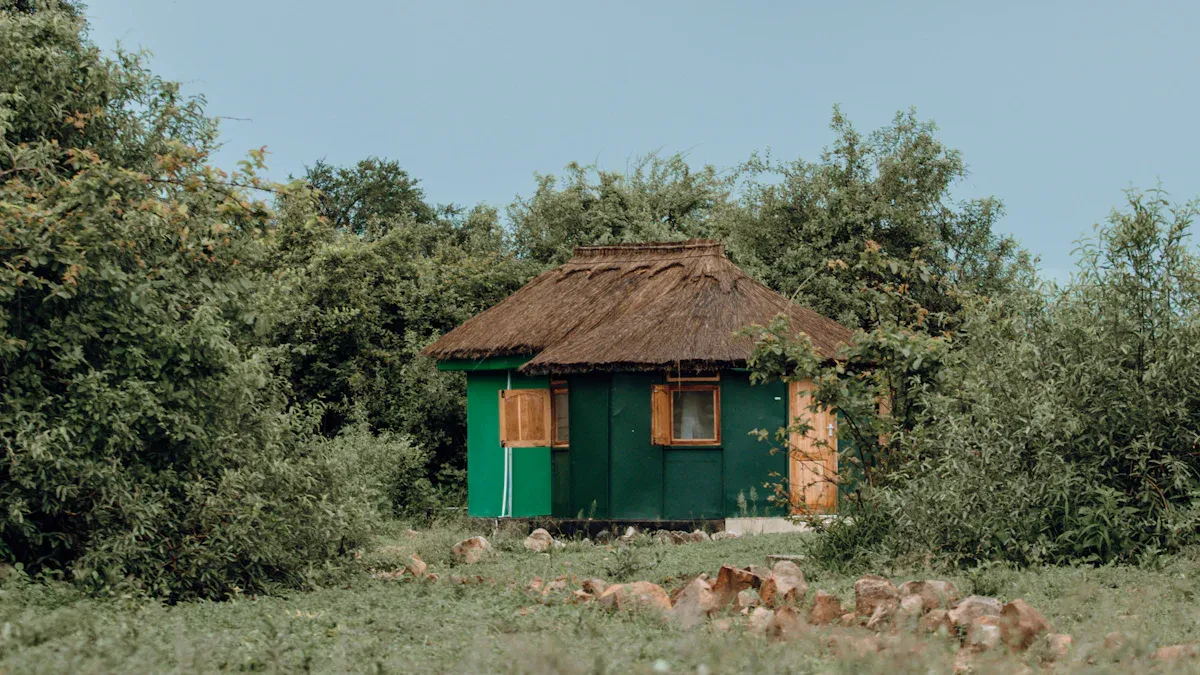
When I look at wood sheds, I see real craftsmanship. Most wood sheds use strong 2×4 framing, just like a house. This makes them sturdy and able to handle heavy snow or wind. I love the way wood siding looks. Cedar gives a rich, natural feel, but it can cost more. Pine is cheaper, but I have to keep up with maintenance. I can pick from different siding styles, like board and batten for a farmhouse look or LP SmartSide for extra durability. Wood sheds let me add shelves, windows, or even a loft. I can paint or stain them any color I want, so they match my home or garden.
Tip: If you want a shed that fits your style, wood is the way to go. You can make it truly your own.
Pros and Cons
Here’s what I’ve learned from owning a wood shed:
- Pros:
- Customizable inside and out
- Classic, attractive look
- Strong framing supports heavy loads
- Easy to add shelves, windows, or doors
- Cons:
- Needs regular painting or staining
- Can attract pests if not cared for
- Costs more than metal or plastic sheds
Price Range
I checked out Best Barns and other top brands. Most wood sheds cost between $2,500 and $7,000, but some bigger or fancier models can go higher. Here’s a quick look at prices for different styles:
| Shed Style | Price Range |
|---|---|
| Alpine Sheds | $4,500 – $9,000+ |
| Quaker Sheds | $3,800 – $7,800+ |
| Dutch Barn Sheds | $4,000 – $8,500+ |
| Cottage Sheds | $3,500 – $7,000+ |
Best For
I always recommend wood sheds to friends who want a shed that looks great and can be customized. If you want a shed that matches your house or garden, wood is perfect. It works well for workshops, garden storage, or even a small studio. If you plan to use your shed for many years and want to make it your own, wood is a top choice for large storage sheds.
Resin/Plastic Sheds
Features
When I look at resin or plastic sheds, I notice how tough they feel. These sheds use heavy-duty plastic that stands up to rain, snow, and sun. I never have to worry about them cracking, warping, or rusting. Most of the time, I just rinse them off with a hose to keep them clean. I like that I don’t need to paint or seal them. The UV protection keeps the color from fading, so my shed looks new for years. I also see that resin sheds do not rot or get moldy like wood. Bugs and insects stay away, which gives me peace of mind.
Tip: If you want a shed that needs almost no care, resin is a smart pick.
Here’s a quick look at what makes resin sheds stand out:
| Feature | Benefit |
|---|---|
| Weather Resistance | Resin does not crack, warp, rot, or rust, even in harsh weather. |
| Low Maintenance | No repainting or sealing needed; just rinse with a hose to clean. |
Pros and Cons
I always weigh the good and bad before I buy. Here’s what I’ve learned about resin sheds:
- Pros:
- Almost maintenance-free
- Easy to assemble
- UV-protected, so no fading or warping
- No rot, rust, or insect damage
- Cons:
- Not as sturdy as wood or metal for very heavy loads
- Fewer options for customizing the inside
- Can crack if hit hard in freezing weather
Price Range
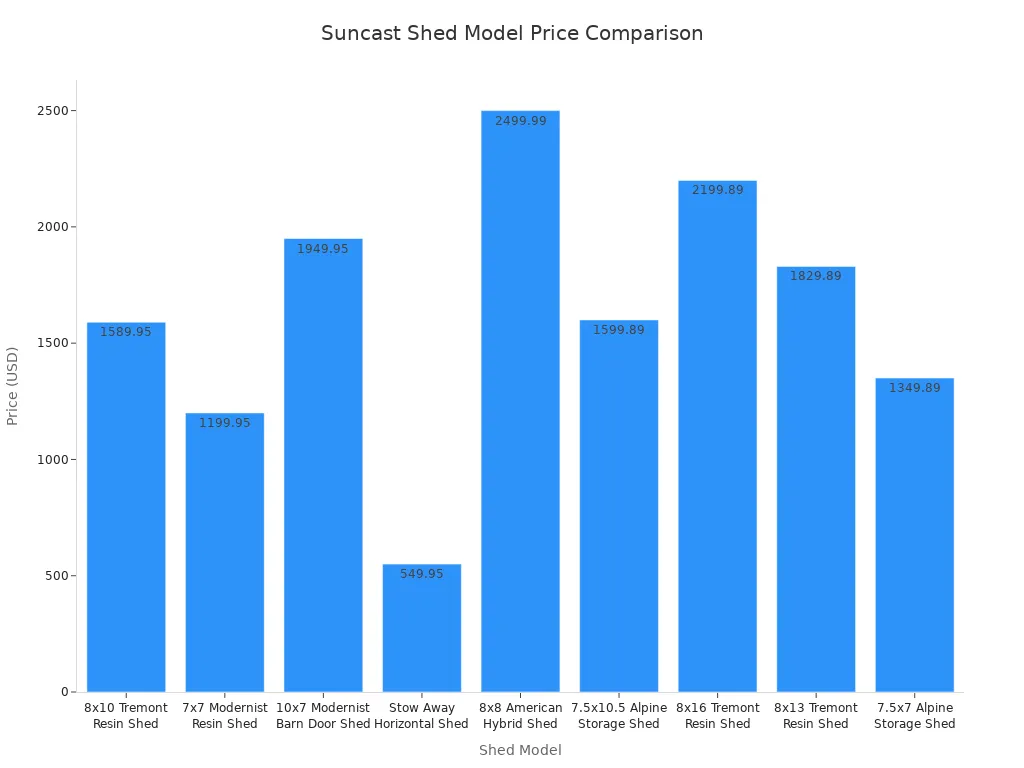
Resin sheds come in many sizes and prices. I see brands like Suncast Tremont and Rubbermaid offer sheds from small to extra-large. Most models cost between $345 and $1,699, but some bigger kits can go higher. Here are some popular Suncast models and their prices:
| Model Name | Price |
|---|---|
| Suncast 8×10 Tremont Resin Shed Kit w/ Floor | $1589.95 |
| Suncast 7×7 Modernist Resin Shed Kit w/ Floor | $1199.95 |
| Suncast 10×7 Modernist Barn Door Resin Shed w/ Floor | $1949.95 |
| Suncast Stow Away Horizontal Resin Shed w/ Floor | $549.95 |
| Suncast 8×8 American Hybrid Wood and Resin Shed Kit | $2499.99 |
| Suncast 7.5×10.5 Alpine Resin Storage Shed Kit | $1599.89 |
| Suncast 8×16 Tremont Resin Shed Kit w/ Floor | $2199.89 |
| Suncast 8×13 Tremont Resin Shed w/ Floor & 2 Windows | $1829.89 |
| Suncast 7.5×7 Alpine Resin Storage Shed Kit | $1349.89 |
Best For
I always suggest resin sheds to friends who want something easy and quick. These sheds work well for storing bikes, garden tools, or pool gear. If you live where it rains or snows a lot, resin sheds keep your stuff dry. I think they are perfect for anyone who wants large storage sheds without the hassle of painting or fixing. If you want a shed that looks neat and stays strong with little work, resin is a great choice.
Metal Sheds
Features
When I check out metal sheds, I always notice how tough they feel. These sheds use steel or galvanized panels, which stand up to rain, snow, and even strong winds. I like that metal sheds don’t attract bugs or rot like wood. Most models come with reinforced doors and lockable handles, so my stuff stays safe. Cleaning is easy. I just hose them down or wipe them with a cloth. I don’t have to worry about painting or staining every year.
Tip: If you want a shed that lasts and needs little work, metal is a smart choice.
Here’s what stands out to me:
- Longevity and strength against harsh weather conditions.
- Low maintenance needs, requiring only occasional cleaning.
- Pest-proof and rot-free, ensuring long-lasting use.
Pros and Cons
I always weigh the good and bad before I buy. Metal sheds offer some big advantages, but they have a few drawbacks too.
- Pros:
- Cost-effective over time
- Long lifespan, resistant to elements
- Minimal upkeep, easy to clean
- Pest-proof and rot-free
- Cons:
- Can rust if scratched or exposed to standing water
- Fewer style choices than wood or vinyl
- May need extra anchoring in windy areas
Here’s a quick table that shows how metal sheds compare to other materials:
| Attribute | Metal Sheds | Other Materials (Wood/Plastic) |
|---|---|---|
| Affordability | Cost-effective over time | Often require more maintenance costs |
| Durability | Long lifespan, resistant to elements | Prone to rot, pests, and weather damage |
| Maintenance | Minimal upkeep, easy to clean | Requires regular maintenance |
Price Range
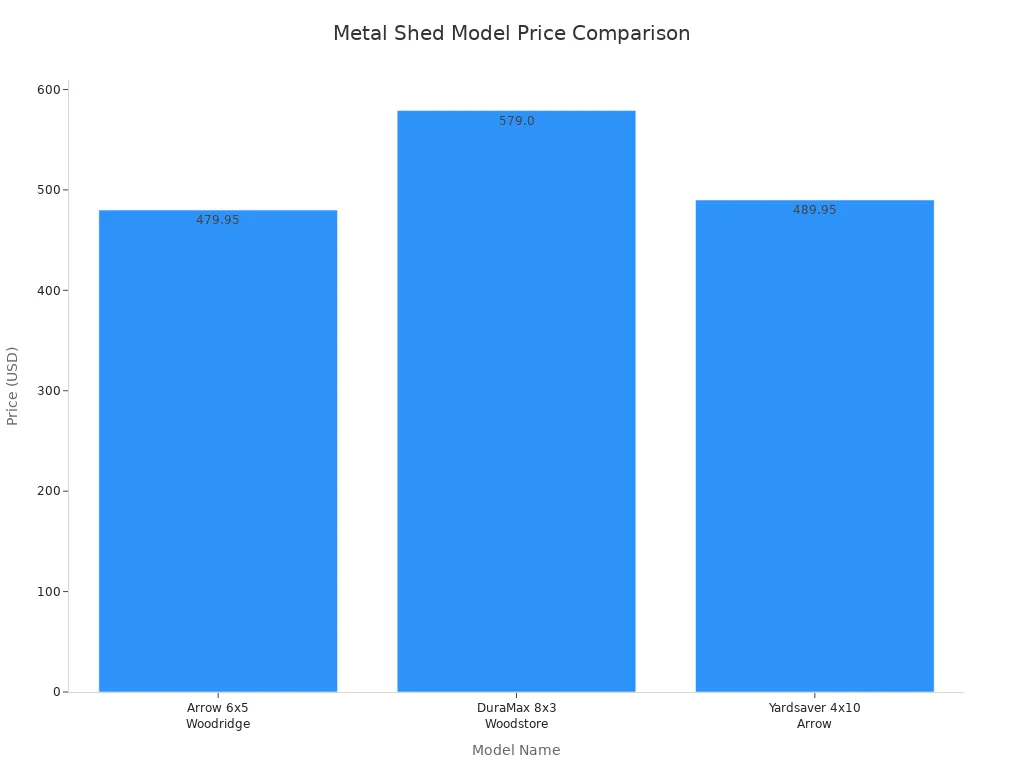
I always look for the best deal when shopping for large storage sheds. Metal sheds are usually the most affordable option. I’ve seen prices start under $200 for smaller models. Most mid-size sheds cost between $400 and $1,000. Bigger or premium models can go over $2,000. Here are some popular choices:
| Model Name | Price | Description |
|---|---|---|
| Arrow 6×5 Woodridge Metal Storage Shed Kit | $479.95 | A compact shed suitable for storing tools and equipment. |
| DuraMax 8×3 Woodstore Combo Steel Shed Kit | $579.00 | Features a lean-to area for firewood storage combined with a small tool shed. |
| Yardsaver 4×10 Arrow Storage Shed | $489.95 | Fits tight against the side of a home, providing an elegant look and easy storage. |
Best For
I always recommend metal sheds to anyone who wants a strong, budget-friendly option. These sheds work well for storing lawn equipment, bikes, or seasonal gear. If you want something that lasts for years and doesn’t need much care, metal is a great pick. I think metal sheds are perfect for people who want reliable large storage sheds without spending a lot or worrying about upkeep.
Vinyl Sheds
Features
When I look at vinyl sheds, I see a lot of benefits for anyone who wants something easy to own. These sheds stand up to all kinds of weather. I never have to repaint or reseal them. I don’t need to sand them, either. If my vinyl shed gets dirty, I just rinse it with a hose and it looks fresh again.
Vinyl sheds have a clear advantage over wooden sheds in moisture resistance. They are waterproof, do not absorb moisture, and are resistant to rain, snow, and humidity. Unlike wood, vinyl does not rot, warp, or develop mold, and it maintains its water-resistant properties without needing additional treatments.
I also notice that vinyl sheds keep their shape and color, even after years in the sun or heavy storms. They don’t crack, rust, or rot. That means less work for me and more time to enjoy my backyard.
Pros and Cons
I always weigh the good and the bad before I buy. Here’s what stands out to me:
- Pros:
- No painting, sealing, or sanding needed
- Waterproof and mold-resistant
- Keeps its shape and color in harsh weather
- Just a quick rinse keeps it clean
- Great for people who want low maintenance
- Cons:
- Fewer style and color choices than wood
- Can cost more up front than metal or resin sheds
- Not as customizable as wood sheds
Vinyl sheds offer exceptional resistance to high temperatures, heavy rain, and strong winds, providing reliable protection for belongings regardless of the weather.
Price Range
When I shop for vinyl sheds, I see a wide range of prices. Brands like Duramax and Lifetime offer small vinyl shed kits starting around $700 to $800. Bigger, insulated buildings from Duramax can cost $8,000 to $9,000, especially if they include shipping. Most large vinyl sheds fall between $1,699 and $11,899, depending on size and features.
- Material quality affects the price. Premium vinyl and galvanized steel cost more but last longer.
- Bigger sheds give you better value per square foot.
- Extras like foundation kits and windows add to the price but make the shed more useful.
I like that vinyl sheds have a clear pricing structure. I can plan my budget without worrying about surprise costs for upkeep. Unlike wood or metal, vinyl sheds rarely need repairs or extra treatments.
Best For
I always suggest vinyl sheds to friends who want large storage sheds that last a long time with almost no work. If you live where it rains or snows a lot, or if you just want to avoid painting and repairs, vinyl is a smart pick. These sheds work well for storing garden tools, bikes, or even as a small workshop. If you want something that looks neat year after year and keeps your stuff safe from the weather, vinyl sheds are a great choice.
Best Value for Large Storage Sheds
Durability
When I think about durability, I want a shed that stands up to tough weather and lasts for years. Metal sheds always impress me with their strength. They use steel or galvanized panels, so they can handle heavy rain, snow, and wind. I have seen metal sheds last over 20 years with just a little care. Vinyl sheds also do a great job. They resist rot, rust, and insects. I like that vinyl sheds keep their shape and color, even after many seasons. Wood sheds look strong, but they need more care to stay in good shape. If I want a shed that lasts a long time with less worry, I usually pick metal or vinyl.
Here’s a quick look at how long each type can last:
| Shed Type | Average Lifespan | What Helps Them Last |
|---|---|---|
| Metal | 20+ years | Rust-resistant steel, strong frames |
| Vinyl | 15–20 years | Waterproof, UV-protected, no rot |
| Wood | 10–15 years | Solid framing, needs regular care |
| Resin | 15–20 years | Weatherproof plastic, UV protection |
Tip: If you want a shed that can handle storms and sun, go with metal or vinyl.
Low Maintenance
I always look for sheds that don’t need much work. I want to spend my weekends relaxing, not fixing or painting. Vinyl sheds are the easiest for me. I just rinse them off every few months, and they look new. No painting, no sealing, and no sanding. Resin sheds are almost as easy. I only need to hose them down now and then. Metal sheds need a little more care. I wash them once a year and check for rust or loose screws. Wood sheds take the most work. I have to inspect them often and repaint or treat the wood every few years.
Here’s a table that shows what I do to keep each shed type in good shape:
| Shed Type | Maintenance Requirements | Ongoing Care Level |
|---|---|---|
| Metal | Annual washing, touch-up painting, fastener inspection, drainage maintenance | Moderate |
| Vinyl | Quarterly cleaning, hardware lubrication, caulk inspection | Low |
| Wood | Regular inspections, treatment or repainting every 5-10 years | High |
- Vinyl sheds: Easiest to care for, just clean and check hardware.
- Resin sheds: Need only basic cleaning.
- Metal sheds: Need washing and a little touch-up.
- Wood sheds: Need the most care, with painting and repairs.
If you want a shed that takes care of itself, vinyl is the best choice.
Aesthetics
Looks matter to me, especially if the shed sits in my backyard for years. Wood sheds always catch my eye. They have a classic, warm look that fits almost any yard. I can paint or stain them any color I want. Vinyl sheds surprise me with their style. They come in many colors and shapes, so I can match them to my house. Resin sheds sometimes look like wood, but they need less work. Metal sheds are strong, but they look plain and don’t offer many style choices.
Here’s how I see the style options:
- Wood sheds: Classic and natural beauty, easy to customize.
- Vinyl sheds: Lots of styles and colors, look clean and modern.
- Resin sheds: Can look like wood, but with less upkeep.
- Metal sheds: Simple and strong, but not much style.
Note: Many homeowners now pick vinyl sheds because they look good and last a long time. I like that I can find a vinyl shed that fits my taste and still get something easy to own.
Budget Options
I always want the best deal for my money. When I shop for large storage sheds, I see that metal sheds cost the least. Some start as low as $139, which is great if I need a lot of space for less money. Vinyl economy sheds also give me good value. They start around $629 and come with features like UV protection and built-in vents. Wood sheds cost more, but I get a custom look and strong build. DIY shed kits help me save money if I like building things myself.
Here’s a table that shows what I get for my budget:
| Shed Type | Price Range | Key Features |
|---|---|---|
| Metal Budget Sheds | $139–$1,200 | Rust-resistant, strong frames, ventilation |
| Vinyl Economy Sheds | $629–$2,225 | UV protection, waterproof, easy to clean |
| Wood Storage Sheds | $1,700–$9,000 | Custom design, strong lumber, flexible options |
| DIY Shed Kits | $1,000–$4,000 | Pre-cut parts, easy instructions, premium wood |
| Pre-Built Value Sheds | $1,989–$5,099 | Weather-resistant, warranty, some customization |
Some of my favorite value picks:
- 👍 Arrow 10×8 High Point Steel Shed: Great price for a big metal shed.
- ⭐ Yitahome: Good for saving money and getting solid storage.
- 🏆 Rubbermaid Resin Shed: Best for easy care and value.
- 🏡 Heartland Statesman Wood Shed: Classic look and lots of space.
If you want the lowest price, go with metal. If you want a good mix of value and style, vinyl economy sheds are a smart pick.
I always match my shed choice to what matters most to me—durability, easy care, style, or price. That’s how I find the best value in large storage sheds.
After comparing large storage sheds, I see each type has its strengths. Here’s a quick look:
| Shed Type | Best For | Key Benefit |
|---|---|---|
| Metal | Durability | Handles tough weather |
| Resin | Low Maintenance | Easy to clean |
| Wood | Aesthetics | Classic look |
| Vinyl | Easy Care & Looks | No painting needed |
Before you buy, measure your space, check local rules, and read customer reviews. I always match my shed to my needs and budget. Want less hassle? Go for resin or vinyl. Need style? Wood works best.